Showing posts with label Book Covers. Show all posts

Thursday, March 05, 2020

Frank Baker and The Birds

Sixteen years before Daphne du Maurier wrote her short story The Birds (first published in the short collection The Apple Tree in 1952), which Hitchcock's The Birds (1963) was loosely based on, British author Frank Baker wrote a novel also called The Birds, in 1936.

Frank Baker had an interesting, if mostly forgotten, career; first, inauspiciously, in a London insurance company. He then moved to St Just in Cornwall, becoming a church organist. He also began to write, publishing his first novel, The Twisted Tree, in 1935. The Birds was published the following year. Set in pre-war London, the apocalyptic tale depicts birds attacking people with the intention of the destruction of mankind. Despite the novel receiving decent notices, with the Birmingham Mail going as far as to call it "The most original piece of imaginative fiction since Wells wrote The War of the Worlds", the book only sold several hundred copies.

Nevertheless, Baker continued writing, and Miss Hargreaves, written in 1940, became his most famous book. It later became a stage play, TV show and radio programme. During World War II Baker was a professional actor, touring with the likes of Paul Scofield. Then he was the pianist for Players' Theatre, a West End music hall. Still writing, he produced novels, short stories, articles and plays. His 1954 novel Lease of Life was adapted into a film by Ealing Studios the following year.

When Hitchcock's film The Birds came out in 1963, Baker was tempted to sue Universal Studios for the similarities between the film and his novel, believing his story to be the inspiration for the film, but demurred. Daphne du Maurier denied ever having heard of Baker's The Birds, though they both lived in Cornwall (a small county where everyone seems to know everyone else), and, by coincidence, Baker's The Birds was published by Peter Davies, who was du Maurier's cousin. Apparently excited about publishing Baker's book, it is likely he might have mentioned it to du Maurier at some point.

Hitchcock scholar Ken Moss believes the Baker novel has more in common with the Hitchcock film than the du Maurier short story, citing certain scenes including an attack in a phone box as well as the triangle of the main characters. Author Christopher Fowler goes as far as to say Hitchcock meant to buy Baker's version but bought du Maurier's instead, accidentally.

Anyway, it seems Baker himself wasn't immune to a bit of plagiarising. In his autobiography, I Follow But Myself, published in 1969, he admits that his birds book bears some resemblance to Arthur Machen’s The Terror, published in 1917. Baker's The Birds was reprinted in a paperback version in 1964 (above) featuring a cover with characters not unlike those in the Hitchcock movie. It was reprinted again in 2013.

Frank Baker and Daphne du Maurier ended up writing to each other. In one letter, du Maurier tells Baker, "I wish for your sake Hitchcock had bought your novel rather than my short story from which to adapt the film". They both lived and died in Cornwall, du Maurier a legend and Baker a complete unknown.

Sunday, May 13, 2018

The weekend in barngains

Pictured:
The Cramps, Smell of Female LP (£2, Putney charity shop)
Yes I have it on CD, but great band, best album title ever, cool cover.

Fairport Convention, Liege & Lief LP  
(£2, Putney charity shop)
Didn't have this one at all. I only have Unhalfbricking by Fairport, which I've mentioned previously.

Rodreiguez, Cold Fact CD (£1, Putney charity shop)
Another recent coincidence this – I was chatting to a friend about Searching for Sugar Man over dinner the other evening, then this turns up. I've mentioned Light in the Attic, who have re-released the 1970 album, before. There's another 'alluring narrative' that goes with Rodreiguez: he was (re)discovered a decade ago working as a labourer in Detroit, not knowing his debut album had become a cult classic, and he had become a national hero and beacon of hope in South Africa.

Paul Nash in Pictures: Landscape and Dream 
(£3.50, Putney charity shop) 
Beautiful book.

Rebecca West, Black Lamb and Grey Falcon  
(£3, Hammersmith charity shop)
Even though this will turn out to be another Gravity's Rainbow, I've been desperate for this ever since going to Kosovo. H said it would turn up eventually, and it did. There was no way I was ever going to pay £21 for a paperback.

Krazy Kat: The Comic Art of George Herriman 
(£2, Crystal Palace charity shop)
The best comic strip ever.

Not pictured:
Two-for-one tickets for Kew Gardens
To see the newly restored Temperate House, even if it did rain.

Free screen print from Mai 68: Posters from the Revolution exhibition, Lazinc gallery, London
To the same friend I was chatting to about Rodreiguez, I muttered something about The Clash line "turning rebellion into money" with regards to the exhibition, but fascinating nonetheless.

Previously on Barnflakes:
Barngains
London Through its Charity Shops

Elsewhere on Barnflakes:
BARNGAINS is a select list of rated barngains from 2007 to the present day.

Sunday, May 28, 2017

The Rayfaring Stranger

 
For Ray on his lonesome wayfaring travels.

Thursday, May 25, 2017

Alton estate of mind – the book


The Alton estate of mind book(let) is finally finished. It's a personal and architectural guide to the Grade II listed Alton estate in Roehampton, where I lived many years ago. The text is mainly the same as on this very blog (see here); some of the photos are on Flickr. But there's nothing like  holding a book (or going to an exhibition). You know, the physical, tactile thing. I still have to get it printed, mind. Watch this space (again).

Tuesday, May 16, 2017

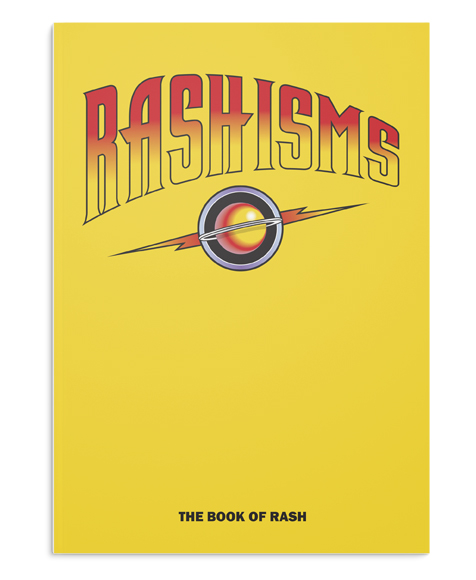
Rashisms: The Book of Rash

My friend and colleague Rashpaul passed away almost two years ago, and he is still sorely missed by many. I've been meaning to create a book of his sayings and hilarious photo montages since he died. I finally have, and will be printing it soon. Watch this space.

Previously on Barnflakes:
Pulp Poetry posthumously published

Wednesday, March 02, 2016

Notes on Black Sparrow Press

I devoured the books of Paul Bowles after travelling in Morocco and I equally voraciously read Charles Bukowski after visiting the States. What links them both is the beautiful editions of their books published by Black Sparrow Press in California. The publishing house was founded in 1966 by John Martin, to begin with purely for the purpose of publishing Bukowski. The down-and-out beat writer Charles Bukowski was forty-six and working in a post office when Martin discovered his poetry. He made Bukowski an offer he couldn't refuse: $100 a month for life to quit his job, write full time and let Martin publish his work. The rest is history and Martin went on to publish other alternative writers such as John Fante and Paul Bowles.

The books feel lovely: larger than regular paperbacks, they have slightly textured, matt covers usually with a light yellow colour background. On the back might be a continuation of the design from the front, or nothing at all. There's no ISBN number, no author blurb, no quotes. The designs are beautiful yet quite simple, often with a geometric shape. Designed by John Martin's wife Barbara, who had no design qualifications or experience, the covers were printed using letterpress, a technique which gives a relief effect with bold and bright colours.

Previously on Barnflakes:
Paul Bowles: Exit on Maghreb Street

Tuesday, November 25, 2014

Book cover: Area X

I've mentioned previously (probably) how album covers can get away with leaving out pertinent information such as the band name and album title, but books or DVDs rarely do. Well, here's an example of a book cover doing just that: Area X by Jeff Vandermeer. No idea what it's about, but I want it.

Previously on Barnflakes:
Versions of Covers
Book cover 'archive'

Thursday, July 10, 2014

Book cover: Travels with my Aunt

Illustration by Stephen Russ (1919-1983) for the first UK edition of Graham Greene's 'fun' comedy, Travels with my Aunt (1969 for Bodley Head). Russ is probably best known for his work with Penguin books, including many of the experimental designs for the Penguin Poets series throughout the 1960s and the redesign of the flaming phoenix emblem for the cover of the then-infamous Lady Chatterley's Lover in 1960:


Browse Barnflakes' book cover section here.

Saturday, August 10, 2013

Incredible Tretchikoff

Back in 2009 I was contacted by Boris Gorelik regarding one of my favourite artists, Vladimir Tretchikoff. Boris had read a few posts I'd written about notions of good/bad taste and Tretchikoff and wanted to interview me for a book he was writing on the artist (unfortunately I wasn't able to make the appointment). Four years later, his biography of the man, Incredible Tretchikoff: Life of an Artist and Adventurer, is finally out, published by Art/Books, a small publishing company.

Boris' book is amazingly the first biography of the artist. Tretchikoff's partly ghost-written autobiography, Pigeon's Luck, has been out of print for years, and how much of it is actually true is open to debate, so it's great to have a biography of Tretchikoff. As it says on the cover of Pigeon's Luck, his life 'reads like a thriller', and I'd still love to see a Technicolour film made of his colourful and extraordinary life.

Buy Incredible Tretchikoff from Amazon.

Previously on Barnflakes:
How to Have Taste
Vladimir Tretchikoff: More than Pigeon's Luck

Friday, July 19, 2013

Illustrated children's books (for parents)

One of the best things about having children is being able to buy and read children's books without fear of embarrassment. But getting children to enjoy beautiful, arty books can be problematic. Like buying beautifully crafted wooden toys for children and getting them to eat organic vegetables, say, all too often children don't appreciate what's best for them and would prefer, say, a bright pink plastic toy and chips instead.

Luckily, my daughter has plenty of good taste, so does appreciate (most) of the following (all of which are years old and referred to as 'vintage'. I'm sure there are good new children books. I don't know, like children's TV, they all seems so mawkish nowadays. I know, I could feel this way as I'm in my 40s):

The Lorax Dr Suess
Yes there's his Cat in his Hat, but we've all read that; and the Grinch is a cinch. So try the Lorax (1971), concerned with environmentalism and anti-consumerism, recently made into a terrible film.

Barbapapa
Barbapapa is just brilliant. The French words 'barbe à papa' literally means daddy's beard but in French means candyfloss.

 
Barbar the Elephant
Like Barbapapa, Barbar is also French. After his mother is shot by hunters, Barbar flees to the city and brings back the benefits of civilisation.

Fungus The Bogeyman Raymond Briggs
Anything by Raymond Briggs is great.

Haunted House Jan Pienkowski
A childhood favourite, this took the pop-up book to new heights.

Henri In Paris Saul Bass
Originally published in 1961 and subsequently hard to get for decades, Henri in Paris has recently been republished. Saul Bass, famous as a film poster and title designer, uses the same simple yet graphic technique in his only children's book.

The Book about Moomin, Mymble and Little My Tove Jansson
I was a bit disappointed to discover that Moomin books are mostly black and white comic strips or novels. Luckily there are some beautifully imaginative picture books, including this one.

Mr Benn
Always dressed in black suit and bowler suit, Mr Benn's visits to a fancy dress shop always result in him trying on a costume and being transported on an adventure particular to the costume he's wearing. Mr Benn hails from 52 Festive Road, Putney.

The Witches Quentin Blake
Growing up, Quentin Blake's illustrations were synonymous with Roald Dahl's words.

Rupert the Bear
The modern cartoon is just terrible; the original books just delightful and beautifully detailed.

The Tiger Who Came To Tea Judith Kerr
Kerr, who recently celebrated her 90th birthday, has just had a book released of her life and work. She also produced the Mog the cat series ('I was enchanted by the strangeness of cats', she says). Funnily enough, both her and Jan Pienkowski live in Barnes, South West London.

Where The Wild Things Are Maurice Sendak
Justly famous for his Where The Wild Things Are, Sendak wrote and illustrated dozens of other books.

Little Nemo in Slumberland Windsor McCay
Though more a comic strip than a book (collections of the strips are available in book form, mostly very expensive), I've been wanting an excuse to mention Little Nemo for a while. Windsor McCay's comic strip first appeared in the comic supplement of the New York Herald in 1905. Wildly inventive with beautiful drawings and stunning colours, each strip consisted of Little Nemo going on a wild dream adventure and the last frame always had him waking up and falling out of bed.

Check out the blog Vintage Kids' Books My Kids Love

Previously on Barnflakes:
Ant and Bee
Baby books and TV programmes
Being Mr Benn
Fake Tintins
Rainbow Magic books

Friday, October 05, 2012

Bond books

With the Bond franchise celebrating its 50th anniversary today, the imminent arrival of the new dull Bond film, Skyfall, and Adele's new Bond theme being declared a classic before anyone's heard it, 007 seems to be everywhere.

I've never been a big Bond fan but I'd obviously buy a first edition hardback Bond book with dust jacket from Oxfam for couple of quid, which I actually did do a few years ago. It was this one, above, which I sold immediately. I like the covers, but not the books or the films.

Firebox, a website which sells completely pointless tat, has released Bond Kindle Cases, reproducing a bunch of early Bond covers so you can keep "your delicate reading matter top secret". Presumably meaning 50 Shades of Grey. It's funny, I was just thinking on the tube the other day how private the Kindle is, you can't see what people are reading. I used to like seeing what book people were reading and judging them. Perhaps every book bought on a Kindle should come with a printed cover to wrap around it.

The early Bond covers were all illustrated by Richard Chopping, a writer and illustrator whose paintings were seen by chance by Ian Fleming's wife, Ann, at a London art exhibition in the 1950s also featuring Francis Bacon. Later, Ann took her husband to see Chopping's paintings, and said he should commission Chopping to do the next Bond jacket. He went on to illustrate nine Bond covers.

In 1965, Topping wrote as well as illustrated his first novel, The Fly.

A recent rewatching of Patrick Keiller's excellent (but flawed) 1994 film London reminded me of the Ernö Goldfinger-designed Alexander Fleming House (now called Metro Central Heights) at Elephant and Castle, quite near where I currently work in London Bridge. I've managed to do the four charity shops in Walworth Road in a lunch hour, so I'll check out the Goldfinger building sometime.

Ian Fleming famously named his Bond villain Goldfinger after the humourless Hungarian architect. Fleming, a near neighbour of Goldfinger's, had apparently objected to the pre-war cottages in Hampstead being knocked down to make way for Goldfinger's modernist house at 2 Willow Road.

Monday, October 01, 2012

Fake Tintins

The morning my brother and I were leaving St. Malo to head back to England (one of the most depressing boat journeys in the world – leaving St. Malo and arriving in ugly Portsmouth), we happened across an antiques market opening up, not unlike the one featured at the start of The Secret of the Unicorn. Wandering through it, I glanced at a book stall unpacking its books. A book seemed to jump out at me: Tintin et les Blues Oranges, one of only two rare Tintin books I didn't own (the other being the book of the film Tintin and the Golden Fleece). I picked it up immediately and almost put it down again after looking at the 16€ price tag: not only was it tatty but it was in French. But before I could put it back a voice boomed out: 'dix'. Ten euros. I examined the book some more and said 'cinq'. The man gave a typically French shrug and held up eight fingers. I held up seven and he said 'okay'.

My brother mocked me afterwards, pointing out that the price went down from 16€ to 10€ in the time I'd merely picked up the book; he was obviously keen to get rid of it. I thought I'd gotten a bargain, however; it's pretty hard to find. The live action films Tintin et les Blues Oranges (1964) and Tintin and the Golden Fleece (1961) were both released on DVD by the BFI last year, but their accompanying book versions have been out of print since the 1960s.

I still reread my complete set of 24 Tintin books. But with the last one being published in 1976 and Hergé dying in 1983, there hasn't been a huge amount of new Tintin material since. There's been loads of merchandise produced by Moulinsart, but it's hardly essential, though I am guilty of owning some of it. No, the only real surprises in Tintin world since Hergé's death has been the publication of Tintin and Alph Art, the final unfinished Tintin story, consisting of sketches and notes; and the English translation published a few years ago of the controversial Tintin in the Congo (first published 1931). Also interesting was Tintin and I, the 2003 documentary about Hergé; and books about Tintin including Tintin in the New World (A Romance) by Frederic Tuten (a friend of Hergé's) in 1993, a novel with Tintin finally discovering women; and the academic, post modern Tintin and the Secret of Literature by Tom McCarthy (2007). Of course, there's also been last year's horrendous Spielberg film.

The main facet of Tintin which has been growing since Hergé's death and rise of the internet is fake Tintins. Mostly these are just fake covers; sometimes they're whole books (the most bizarre being Tintin au Congo a Poil; which is, er, Tintin in the Congo, nude). Fans are mixed about them; fakes are, strictly speaking, illegal, and a good percentage of them are sexual (Tom McCarthy identified three types of parody: the sexual, the political and the artistic), so they're not really as Hergé would have envisaged them. However, a lot are drawn by true fans who are obviously passionate about Tintin. The best ones continue the legacy of Tintin and are a tribute to Hergé, showing great imagination and technique. Canadian Yves Rodier is one such artist producing Tintin parodies; he is perhaps most famous for unofficially completing Tintin and Alph-Art.

Tintin's iconic look, his innocence and Hergé's crisp, clear lines make him ripe for parody. Fakes seem to be all the world. I remember seeing Tintin T-shirts and posters in South-East Asia: Tintin in Vietnam, Thailand, Cambodia. He only had twenty-four adventures in the books; the parodies let him keep on travelling. 

Previously on Barnflakes:
Hergé's favourite Tintin panels
Lookalikes #10: Thomson and Thompson
Eponymous heroes 'largely dull'
Tintin never went to Cambodia

Monday, May 07, 2012

Book Covers: The Death of Grass


John Christopher's The Death of Grass, retitled with the less snappy No Blade of Grass for American readers, is a post-apocalyptic sci-fi story in a similar vein to John Wyndham's The Day of the Triffids, and came out just a few years after Wyndham's classic before going out of print for a number of years. A film version of the book did it no favours, apparently being so bad that even the author hasn't seen it. Penguin finally republished the book a few years ago, so hopefully it will get another audience, seeing as post-apocalyptic fiction has undergone a renaissance with a new set of fears – terrorism, environment, financial collapse, pandemics, overpopulation – igniting the public imagination. The first edition of The Death of Grass (top left), published in 1956, is now worth a lot of money. John Christopher, real name Samuel Youd, is alive and living in Rye, as this amusing blog post about the literary connections of the town testifies.

Previously on Barnflakes:
The Day of the Triffids book covers

Friday, December 30, 2011

A Book of Hedgerow Berries


A Book of Hedgerow Berries; Oxford University Press; 1949; Written by Dorothy A Ward; Illustrated by Marjorie Gillies

What a lovely book. There's something quite modest in the way it tells you it's a book, rather than just stating 'Hedgerow Berries'. I love the cover – the design for all the Chameleon Books, I guess (this is number 29). Its size and format are remarkably similar to Ladybird books. The illustrations, which look like watercolour, are excellent.*

The introduction states: 'Our English countryside has the reputation for being one of the most beautiful in the world, and one of its most distinctive features is the hedgerow'. This may well have been true in 1949 (just about), but post-war has seen the amount of hedgerows in England halve.

As the English Hedgerow Trust says: 'Hedgerows are a fundamental part of the heritage of the British countryside, defining the nature of the landscape and providing a major shelter and food source for a huge variety of mammals, birds and insects. Hedgerows are effectively a vibrant ecosystem, a huge nature reserve in our small and (over) intensively farmed country.'

* In fact, my only gripe about the book is, er, it wasn't given to me as a Christmas present, but to a close family member instead.

This is my last post of 2011. Have a Happy New Year and see y'll in 2012, a 2009 disaster movie directed by Roland Emmerich and the end of time according to the Maya calendar. Can't wait.

Monday, December 05, 2011

Book Cover: Robert Frank's Les Americains


Of all the different covers for Robert Frank's The Americans, this French first edition, published in 1958 when no American publisher would touch it with a barge pole, is by far my favourite. It's ironic or even perverse, perhaps, that a now-iconic book of photographs should have what looks like a sketch on graph paper for its front cover. But I love it. With the graph paper lines resembling a skyscraper and the people milling below like ants, it sums up the alienation which informs many of the photos within the book. The drawing was by cartoonist Saul Steinberg, most famous for his illustrations for the New Yorker magazine. Funnily enough, just a few years before, Henri Cartier-Bresson's almost-equally influential photobook, The Decisive Moment, was published in France as Images à la Sauvette (in 1952)… with a cover illustration by Henri Matisse.

As Martin Parr stresses in The Photobook: A History (Volume 1), the French edition of The Americans was a different book altogether to the American version produced in the States the following year. The French version was full of texts about America written by the likes of Steinbeck, Whitman, Miller, Faulkner and Simone de Beauvoir (making it almost look as if Frank's photos were simply illustrating the text) with a decidedly anti-American slant. The American version removed all the French text and put in Jack Kerouac's famous introduction. Nevertheless, Americans didn't get it, both the subject matter ('a degradation of a nation!') and technique ('meaningless blur, grain, muddy exposures, drunken horizons and general sloppiness'). Since then its reputation has soared, with The Americans now considered a masterpiece, and the most influential photobook ever.

According to AbeBooks, the French first edition is the most collectible photography book of all time. I now own two different versions, unfortunately not the first edition, which would cost in excess of £2000.

Previously on Barnflakes:
Robert Frank's Ridiculous Ratios
Random Film Review: Cocksucker Blues

Saturday, November 12, 2011

Book Cover: Mother, Brother, Lover


There used to be a time when I would devour lyrics of songs, either by listening to the words or reading them (or both). This is something I tend not to do any more, either because I can't understand what anyone's singing nowadays (yes, I'm getting old) or, mostly, because with the majority of music, lyrics don't seem to be important (ie they're trite) and the human voice can be listened to like a musical instrument, which is fine by me. (Bands like Radiohead or R.E.M. make out they're serious or intellectual until you actually listen to the lyrics of their songs and realise they're meaningless or banal, such as, say, Radiohead's House of Cards: ' I don't wanna be your friend / I just wanna be your lover / No matter how it ends'. Zzzzz.)

I'll always listen to the words of certain singer songwriters – 'like it was written in my soul from me to you' – such as Dylan, Cohen, Reed and (Paul) Simon. But of more recent and younger singers or bands, Pulp and Jarvis Cocker spring to mind. Pulp usually printed the lyrics to their songs in their CD booklets, but advised people against reading them whilst listening to the music.

To save having to find all those old Pulp CDs, Faber have recently published a collection of Jarvis Cocker's lyrics, entitled Mother, Brother, Lover. It seems funny, at first, seeing the cover looking like an old Faber classic anthology of a famous poet, until you realise that Cocker is a famous poet of sorts and should be celebrated as one. I love the look of the book. Come on, this is something you can't Kindle. You've got to hold it and leaf through the pages.

• What I'm ever-so-subtly doing here (and here) is giving any readers who know me some ideas on what to get for my birthday and/or Christmas. At under £8, Mother, Brother, Lover is certainly the cheaper option than the Saul Bass book.

• Have I mentioned I saw Jarvis and his (then) wife and baby strolling along – Oh, I have? Okay, fine.

Wednesday, November 09, 2011

Pulp Poetry posthumously published


Over fifteen years after Joy and I first started sending thigh poems to each other (don't ask), Pulp Poetry finally gets 'published' (by which I mean professionally printed. Previously, the only few existing copies were printed on home inkjet printers).

This is what it used to say on Barnflakes.com about the book:

Pulp Poetry started life as correspondence between Joy and Barnaby sometime in 1995. They can't remember who, what or why they started writing poems about thighs to each other. Some might have even called it bizarre. But the poems proved so popular that (three) other people joined in. These poems formed the basis of the anthology Pulp Poetry featured in Joy's now legendary art exhibition / happening, 'Much ado about nothing' in September 2000.
 The poems and book lay dormant in their somewhat amateurish state until some years later when the creators thought it needed a redesign and reissue. This is it.

The book was specially printed in memory of Joy Bedford. She will be dearly missed by many.

Available to buy on Etsy.

Friday, October 14, 2011

Joe Orton's guerilla art


In a naughty bit of guerilla art or culture jamming some twenty odd years before the terms actually existed, the then unknown gay playwright Joe Orton and his lover Kenneth Halliwell, unsatisfied with the 'rubbishy' and tasteless books in their local Islington library (some things never change), defaced the library books by modifying the covers with new pictures and text – with surreal and hilarious results. The two were eventually caught in 1962 and ended up spending six months in jail for their crimes, which actually proved a blessing in disguise for Orton's writing:

'I tried writing before I went into the nick… but it was no good. Being in the nick brought detachment to my writing. I wasn't involved anymore. And suddenly it worked.'

Joe Orton went on to write his most famous plays, including The Ruffian on the Stair, Entertaining Mr Sloane and Loot, before being murdered by his ex-lover Halliwell in 1967. Orton was 34.

More recently, in 2006 Banksy defaced the CD covers and inserts of 500 of Paris Hilton's debut album, returning them to HMVs across the UK. Dangermouse remixed the album and renamed the songs with titles such as Why Am I Famous? Copies are now probably worth hundreds, if not thousands of pounds. And before you ask, yes, I still look at every Paris Hilton CD I see in a charity shop, just in case.

The term culture jamming, the anti-capitalist art of subverting mainstream institutions, was coined in 1984 and is usually thought of as defacing things on a much larger scale than books and CDs, such as billboards. Artists including Ron English, perhaps most famous for his Marilyn Monroe with Mickey Mouse breasts, and the Billboard Libertion Front are two of the more prominent proponents of the art, which tends to be quite amusing but achieves nothing at all.

How things change. When once Orton and Halliwell were classified as criminals for their actions, now the Islington Museum are showing an exhibition of their defaced covers. Malicious Damage: The crimes of Joe Orton and Kenneth Halliwell in Islington runs from now until 12 January 2012 at Islington Museum, 245 St John Street, EC1. Admission free. Visitors are free to admire the defaced books but not emulate the technique.

I first heard about the exhibition at Feuilleton, who heard about it in the Guardian.